13 October 2010

It makes me overwhelmed

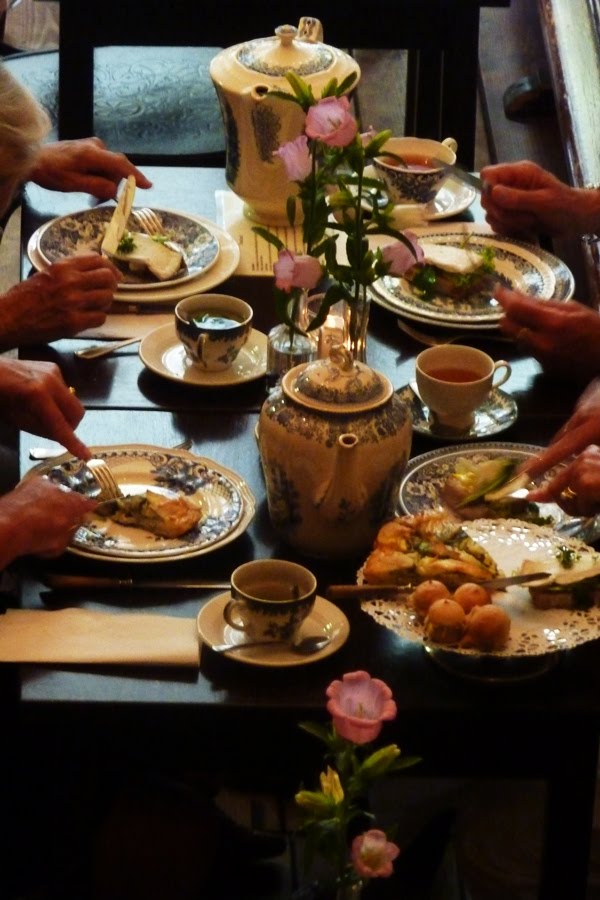
A while ago I chanced upon a blog post in which its author gave an inspirational account of her stay in Amsterdam. Seeing that I live in Amsterdam, I didn’t intend to seek out travel stories about Amsterdam, just so you know, but as I saw the title – There was Amsterdam – I thought it would be ignorant of me to pass it up, especially if posted on a food blog as delicious as Sweet Amandine. So I dived into the story curious to learn about what my adopted city showed to Jess (the Sweet Amandine’s creator) and her husband, Eli, during their stay in Amsterdam this past August. I don’t think it makes any sense for me to retell the whole story here. Please read the original, it’s a treat. For our purposes, what I want to tell now is that there was a moment in the story that gripped me quite tight. Right there, in the spot between the eighth and the thirteenth paragraphs my heart came to a screeching halt, did some crazy summersault, and tumbled on with excitement all the way towards the final full stop of There was Amsterdam. And all that is because Jess talks about the bakery. My bakery! As I was re-reading the post in question, I couldn’t help but repeat to myself how bizarre this felt to hear somebody else tell their story about the bakery. Usually I talk. Now I listened.

Since I read Jess’s post, I’ve been thinking a lot about my own story – but not about the bakery. I’ve been thinking about my story in the bakery. About how I started off – and what I am gradually becoming. It wouldn’t be honest to say that it was my initial goal to work in the bakery. I considered myself a loyal customer, the type that wouldn’t mind to cycle forty minutes one way in the rain just to get, say, a loaf of fresh baguette. I admired Issa and Marco, the two brothers Niemeijer, for making that excellent food that like a magnet would attract me no matter what; for creating and running a place that instantly becomes everybody’s favourite haunt. I enjoyed the role of an observer, I guess I could say that, coming in a few times a week to say hello and offer my thanks in my deconstructed Dutch (and then to giggle awkwardly when they replied back in fluent Dutch). I weaved my social life around that place: I brought my then dates and a couple of good friends for lunch there, all at respective times, should you ask. I didn’t intend to apply for a job there, though. Until I found myself, as a then student, in need for a part-time job – badly.

The circumstances conspired in such a way that there was a vacancy in the bakery back then. I took the job. I started off as a dish-washer. It was a touch more than a year ago. Although doing the dishes was my priority, I couldn’t help but poking my nose into the bakery’s activities. I was open with Issa, a baker, and Marco, a chef, about my plans to be a professional food-writer, the one with a hands-on approach, as I reasoned. As a starting point -- and I already touched upon it here -- I was shown how to make tartlets. I had to learn to beat the bejesus out of the tartlet dough (pate sucre) to soften it; to remember the steps of rolling it out with the
dough sheeter; and finally, to get the trick of molding the rounds of the cut-out dough into tartlet shells fast -- very fast. If I’d take my time to do that, the dough would then become sticky, very difficult to handle. At the beginning it felt like a military camp, somewhat. Instead of doing push-ups and sit-downs, I’d make tartlets with a timer counting away precious minutes beside me. One day, I remember, it was suggested I make approximately sixty to eighty tartlets in no longer than fifteen minutes. I think I did the “tartlets boot camp” well. To make tartlets fast is no problem anymore. To make them swiftly is relaxing now.

After I’d made myself comfortable around tartlets, I moved on to learn the making of a tarte Tatin. The most challenging part was to arrange thin apple slices in a way so that they, still standing on their curved ends, would overlap each other neatly.


To be clear: it’s not that difficult of a task. But there is a catch. If you don’t use enough apple slices, once baked they will shrink and reveal the dough underneath, the way the hair on the head can thin out and show the skin (ouch!). Conclusion: it’s important to use a good amount of apple slices, say, three apples’ worth per pie, to make sure that a Tatin looks as close to immaculate as possible. Warning: tucking in the apple slices next to, and in between, each other in a careful fashion requires some time, from five to seven minutes, I found. This is a potential material for trouble, because it’s a general policy here that you shouldn’t spend too much time on one thing, otherwise you create sort of a jam in your own work flow.


After about six months in the dish-washing job, getting a hands-on approach only occasionally depending how many dishes I had to do at a given moment, I thought I should carve out some time that I would spend solely on working in the bakery. Could I possibly get an apprenticeship, I asked. This past February I became a baker’s apprentice.

The writing of this post doesn’t come easy to me. For one, because there are so many things I want to tell. It makes me overwhelmed. It feels like my brains are a pot of boiling water, thoughts being the bubbles. Should I mention how I learnt to make that crème au citron that requires the non-stop ten-minute whisking? How could I not mention croissants and the challenge that comes with making them? On days when we are fast enough as to not let the butter start melting into the dough (a tall order when working next to the piping-hot ovens) before baking, the croissants puff up so beautifully in the oven that all those layers of dough, being risen by the steams from the melting butter (that’s why the butter should not melt any time earlier) make you want to stand by the oven, ignoring all the hiatus that may be all around, clasp your hands and murmur, wow, they can rise that high! If it so happens that you absolutely have to bite into such a wonder, you incidentally drop one on the floor. In this event, it can’t be served to customers. The floor is clean, so you knew what you were doing – you got yourself admittedly the best croissant Amsterdam can offer.


In September it came time for me to get myself acquainted with the bread dough. The order in which the ingredients are added can vary depending on the bread, but normally you mix flour with water and sourdough, let the mixture rest, then add salt, mix it all again, and, equally divided on the scales, put it in plastic boxes for a rise. Nothing incomprehensible or undoable. Except that the dough is heavy. Very heavy. Miss Paola – my fellow woman baker, my friend! -- metaphorically compared the process of taking the dough out from the mixing machines to the “pulling an overweight kid, who strapped themselves in velcro just to make sure you can't move them from the playground”.

Reader, I would go on like this for hours, hopping from one thing to tell to another. But generally speaking, as I think about the way I made it in the bakery starting, basically, from scratch, I feel proud. It’s not oh-look-what-I-can-do kind of pride; it’s pride that silently sits in the corners of my mind waiting to be called in every now and then to remind me not to be so harsh on myself on the occasions when, for example, a bowl of chocolate ganache incidentally slips from my hands and lands on the floor, chocolate ricocheting in all directions and covering pretty much everything in the radius of three meters, including that dough sheeter that Issa has to use for the rolling out the croissant dough, like, now; and my face, in such a way that I look like a Moulin Rouge girl, what with the artificial moles around my lips and on my cheeks.

Of course all my achievements, past and present, come with a price. Working in the bakery five days a week now, starting earlier than the sunrise, is exhausting-- just as much as it is rewarding. Daily baking/preparations programme is intense, with no wing room, so to speak. So it is no exaggeration to say that the only moment of rest we have during the day is a fifteen-minute lunch break, which is almost always punctuated by the oven’s beeping, which means it is time, right now in the middle of a recess, to take whatever was baking out of the oven. As you can imagine, this way a so much needed break flies past us unnoticeably.

Yet, that exhaustion also comes with an incentive. It is the realization that the bread and pastries we make in the bakery can be a source of happiness for many. It fills you with contentment and makes you “hit the floor with your ass”, as Charlie, one of our bakers, says, meaning that it makes you happy. Only being French, Charlie has a difficulty pronouncing the initial “h”, making it sound like “eat the floor with your ass”! Either way, it sounds very appropriate, I find!

2 September 2010

I would love to


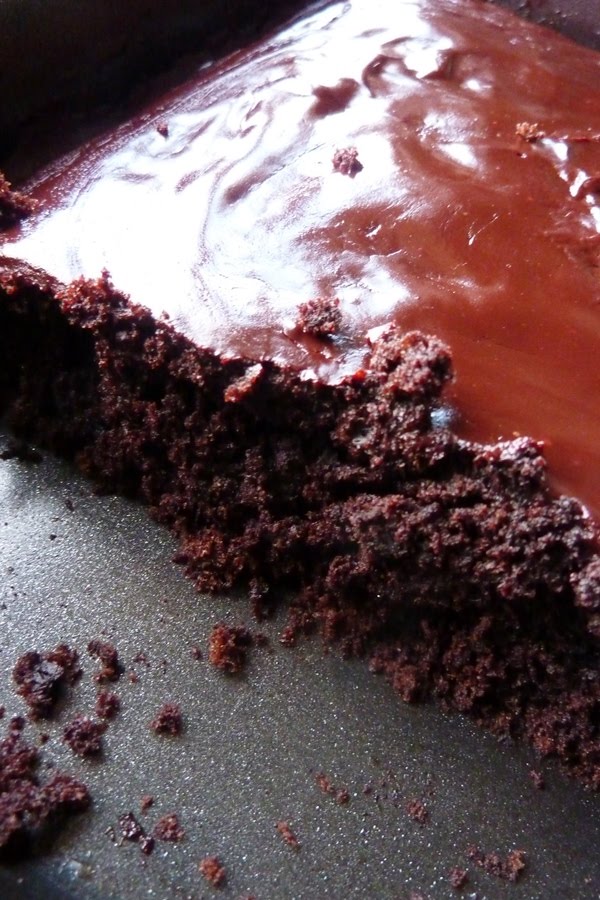
Dear Reader, my drama with that chocolate cake (remember?) is over.

As a foreword, let me tell you that I made the cake ten times within the past fourteen days, which means the cake was seen in my kitchen almost daily for the last couple of weeks. I would love to explain the cake’s frequent appearance by its exceptional taste, so exceptional that each time the sweet thing was gone sooner than I could bring it to the table. Oh how much I would love to say that all that is true. But brother, it’s not! This cake, it was unruly. It drove me crazy. It exhausted my patience. I’m not exactly happy to relay all this, but nine times out of ten I flipped it the finger and furiously sent it into a trash bin. Why I kept making the stuff was that I can be stubborn -- if I want to. And I love chocolate cake. Plus, I believed a Moosewood restaurant cookbook that said that this six-minute chocolate cake is “an economical, low cholesterol, delicious dark cake that goes into the oven in 6 minutes with no mixing bowl to clean, because the batter is mixed directly in the baking pan”. I want to think that somebody somewhere did as the recipe has them to -- and loved the results. Me, I only made my trash bin full.


The only thing that I can agree with is that the cake is “low in cholesterol”. True -- no eggs, no butter, just vegetable oil. I would think twice before nodding in agreement about the creation being “economical”, as the recipe advertises. Good-quality cocoa powder (you need it for the batter) is not entirely inexpensive, right? The same goes for chocolate (you need it for the glazing). So calling the cake “economical” is not fully accurate, I noticed. As to the deliciousness of the cake, well, the past few weeks I spent nearly all my free time looking for it, that deliciousness. I found it not.

Like I mentioned, the recipe comes from a book by the Moosewood restaurant collective Moosewood restaurant cooks at home whose primarily focus lays on the food that’s fast and easy to make, and above all, the food that’s natural (Moosewood restaurant is a natural foods eating establishment).

(I borrowed the book from my baker boss Issa Niemeijer who is a vegetarian. When it came time for me to return it and I hadn’t yet copied said chocolate cake recipe, I hastily made a picture of it. I couldn’t wait to make this cake.)


I feel I should say now that I made it a point not to deviate from the original recipe too much. The cake was intended to be simple and quick. Its main ingredient is unsweetened cocoa powder, no chocolate in the batter. An innocent observer could now notice that I could have used chocolate ganache or chocolate chips in addition to the cocoa powder to try to make the cake close to being heart-rate accelerating, but I chose not to. If I did, it would not be that “economical, low cholesterol, delicious dark cake” any more, was my reasoning. I didn’t want to complicate anything about the stuff. I just hoped it’d be delicious. Alas, it never tasted as much to me. Reader, I don’t want to come off as a Negative Nancy around here, what with all the complaining and everything. The cake wasn’t bad. But it didn’t cut it for me, either.


As I said, I didn’t inject the cake with the ganache and whatnot. Yet, in my desperation, I kept adding things to it -- such as lemon syrup which I’d spoon over the cake before covering it with chocolate glaze -- trying to make the cake flavorful and interesting, attempting to create a bomb of flavor out of it. But now as I think of it I can see I kept forcing this cake to be what it’s not. In a few brushstrokes, it’s an easy cocoa-based cake whose attraction may be hidden deep down its nude simplicity. On its own, cocoa can never be as rich in flavor as chocolate, but I didn’t want to see it then. I had my grand expectations which would never match what this cake is all about: decency. Instead of accepting it, I was getting continuously upset: it’s not what I want it to be, it’s not what I want it to be, it’s not what I want it to be. Finally, I figured it’s better if I stop looking for something that’s not there. I’m not going to make this cake anymore.


Yet, I’ll post the recipe. Maybe somebody will get to make it, and will love it, and will tell me that I am crazy to “dis-love” it.


Six-Minute Chocolate Cake
Adapted from Moosewood restaurant cooks at home by Moosewood collective


Despite it being said in the book that the cake batter “can be mixed directly in the baking pan”, I’d recommend you don’t do that. It’s not entirely convenient to try to mix the batter in a square cake form; a good amount of flour can be left unincorporated in the corners of such pan. Of course if you are using a round baking pan, that’s not a problem anymore. Yet, it’s better to first mix the wet ingredients together in a separate bowl, this way you will not over-mix the batter adding wet ingredients one by one. For those reasons, it’s better to use two separate bowls – one for dry and another for wet mix. Which, I agree, is at odds with the original idea for the cake preparation to be only six-minutes long. Still, a few more bowls notwithstanding, it’s fast to whip up.

Dry mix
1 ½ cup unbleached all-purpose flour
½ cup unsweetened cocoa powder
1 tsp baking powder
½ tsp salt

Wet mix
1 cup buttermilk
1 cup light brown sugar
1 tsp vanilla extract
½ cup non-fragrant vegetable oil

Bittersweet chocolate glaze
½ pound (250 grams) good-quality bittersweet chocolate
¾ cup warm milk

Preheat the oven to 165 C (365 F). Butter a 8-inch square or 9-inch round cake form.


In a medium bowl, sift together the flour and salt; mix well. Continue sifting in the baking powder and cocoa powder. Mix again.

In another medium bowl, whisk together the buttermilk, sugar, and vanilla extract. Whisk in the oil. With a spatula, stir the wet mix into the dry mix just until incorporated.


Pour in the prepared cake form and bake for 40-50 mins, or until a toothpick inserted in the center of a cake comes out clean. Let cool for 15 mins. Take out from the cake form and put on a wire rack.


While the cake is cooling down, prepare the chocolate glaze. Melt the chocolate in a heatproof bowl set over a pan with boiling water. Once the chocolate is melted, stir in the warm milk. Spoon the glaze over the cooled cake. Refrigerate for at least 30 minutes before serving (as you can see from the photo, I didn’t wait that long.)

1 August 2010

It's way better


I talked about this six-minute chocolate cake last time, or more accurately, I briefly mentioned how I successfully burnt it (the thing is called six-minute chocolate cake, because as the recipe says, it takes just as much for the cake batter to be prepared).


Today I made said cake again, this time having avoided any calamities, and I don’t quite know what to think of the stuff. This cake, it tasted funny. Weird, even. Anthony even thinks “it’s not pleasant to chew on”. Isn’t it plain awkward? I feel some serious recipe tweaking must be done. I want this cake to be fine.


That means no cake today. Again. But I didn’t come empty-handed either. I brought you some summer roasted vegetables. It’s not exactly an alternative to chocolate cake, I realize that, but I figured you would agree it’s way better to have seriously enjoyable roasted vegetables than “unpleasant to chew on” chocolate cake on your plate. Ideally, both should be fine, I hear you, but sometimes, when I’m in my own kitchen, tired, I’m just capable of doing one right thing at a time. But please, don’t let me digress; it’s important that I tell you about this roasted vegetables business.


I’m confident you’ll like it. Anthony did, and although he strongly disagrees, he is one fussy eater: “I am not really a fan of spelt flour”, was his response to my making carrot muffins with spelt flour three times in a row; or “I want things to have taste”, was a reaction I got after I’d served lentils cooked in vegetable stock -- how’s that for flavor? -- for dinner.


Funny, but initially I made these roasted vegetables for myself. I thought I would have a dinner alone the other day, so I dived into What we eat when we eat alone and found the recipe there. Even not a recipe, an idea, really. You take your favorite summer vegetables, say, eggplant, zucchini, young potatoes, young carrots, beets, if that’s what you're into, and bell peppers; toss in some aromatics such as onion and garlic; season the lot, and send it in the oven for less than thirty minutes. It is recommended that you also use a handful or two of cherry tomatoes; they’ll release their juices and get caramelized and bind together whatever vegetable material you use.


The result is rewarding, only when I made the thing I didn’t get to eat it alone. In fact, I didn’t get to eat it at all (just a few bites). Anthony wolfed down my roasted vegetables -- faster than I could take any actions, such as grabbing a fork, pushing him aside, and eating everything myself. Which made me roast another batch, and a batch more after that: “I could eat it every day and not get bored of it, the stuff is so flavorful!”. Fine, I got it.


Summer roasted vegetables


Adapted from What We Eat When We Eat Alone by Deborah Madison and Patrick McFarlin


Like I said, there is barely a recipe. The amounts, as well as types, of vegetables are certainly not written in stone, just make sure to use seasonal produce. I also found that finely chopped green celery leaves, in addition to you fresh herbs of choice or just on its own, deepens the collective flavor of the roasted vegetables even more. It’s like a belt to a cascading evening gown: with it, the dress, or rather a woman in it, looks even finer. Ah yes, and don’t be a scrooge with salt; it helps to open up the vegetable flavor.


1 medium eggplant, cut into cubes
2 large carrots, peeled and sliced into ¼-inch rounds
½ head garlic, cloves separated and peeled
1 bell pepper, cut into strips or cubed
1 large yellow onion, peeled, cut into wedges with the root ends attached
1 handful of cherry tomatoes, stems removed
olive oil
salt/pepper
chopped fresh herbs (one or a combination of a few) such as rosemary, oregano, parsley, thyme, chives or/and chopped green celery leaves

1. Lightly salt the eggplant and let sit in a colander to drain. Preheat the oven to 200 degrees C (400 degrees F). Line a baking sheet with parchment paper.


2. While the oven is warming up, wash and cut the rest of the vegetables. Put them in a bowl.


3. When the oven is ready, rinse the eggplant and roughly dry it off with a paper towel. Add the eggplant to the other vegetables. Add enough olive oil to moisten; season with salt and freshly ground pepper. (You can also add a pinch each of dried oregano and/or thyme, if desired.)


4. Spread the vegetables out onto a prepared baking sheet, making sure to give the vegetables enough space so that they don’t crowd each other. Put in the center of the oven and roast for 25 minutes, or until the vegetables take on color in places and become tender. Turn them a few times while cooking. Remove and let cool a little bit.


5. Transfer into a small bowl (or a food container); add fresh herbs and a splash of olive oil; mix. Taste and adjust the seasoning if needed. Equally delicious warm or at room temperature.

Yield: 1 big meal for one, 2 light meals for two, or 4 side-dish servings


22 July 2010

This is how it works


This is how it works: as a student, here is a student accommodation for you. Finished your studies? Congratulations! Now go and find another place to live then, oh yes, and good luck!

In other words, my two-year rental agreement for a shared student apartment expired last week, by which time I had to find myself a new home in Amsterdam. And so July 15th was moving day for me. Actually, that’s not true, because it was moving day for me – and Anthony.

I think it’s now an appropriate moment to mention that Anthony and I, well, we are buddies. I mean, we are together. Our story, it didn’t begin with fireworks. We both agree that the day we met was not exactly a memorable experience, except that we had quite a spectacular cloud-like sardine mousse on rye bread as a starter at dinner in a restaurant where we went. Later, we started hanging out regularly enough for me to make Anthony feel sick at the sight of toasted buckwheat grains (when I get to know somebody unfamiliar with Russian cuisine, I stuff them with buckwheat porridge a fair amount!). We became close friends. And I wanted to keep it that way, no relationship drama for me, thank you. And so it was -- until I went to Russia for a month. It’s probably a cliché to say, but distance does help to filter through the mental trash and see what’s important. It appeared to me then that I want to stick by Anthony’s side. Now I tell him every night to unplug all the electrical devices before going to bed because I believe that the electricity field all those gadgets create messes up with my sleep and he tells me to go and see a psychiatrist because I seem to have a plugged-in device phobia. I let him know he is an idiot; he informs me about my being stupid. We are buddies.

So we moved in to a new place. It’s small, but it has an oven, a Jacuzzi bath, and a DVD-player. And a tailless cat, Flash. We can stay here until the owner has come back from her travels, which will be sometime in late fall. And what’s also great is that I’m now only ten-minute bike ride from the bakery, as opposed to an hour one before. There is a café below us, and a spacious attic up a few stairs where the cat can chill out when she is stressed.

Today I was going to not only tell you all that. I was also going to make a six-minute chocolate cake for you, to give us all a treat. Unfortunately, that didn’t go as planned.

I, a baker’s apprentice, kept the cake in the oven for too long which gave it a taste of, in Anthony’s words, “burnt toast with chocolate flavor”. And if that wasn’t upsetting enough, I accidentally knocked the stuff off the kitchen counter. Golly gee whiz and a bucket of hog wash!


I’m sorry. I’ll do better next time.

8 July 2010

It is finally here

I was waiting for a day when I can throw my arms in the air and cry out loud, “I’m finished with my master’s thesis! Oh boy, am I done with it! Oh holy blessed mother!”. It took what seemed like forever for this day to come.


But it is finally here, this day!


I will not sound original if I say it is never an easy deal to write a thesis. With my on-going apprenticeship in the bakery, it certainly was no feast for me. The pressure to meet my deadlines was high, 24/7. Mood swings were constant. Tiredness and fretting were my next-door neighbors. Binging on chocolate, peanut butter and strawberry jam on graham crackers was…well, you get my drift. Ideally, I would have almost all summer to finish my thesis, but because my supervisor was leaving her job earlier, I had to hurry up and get this job done within two months. Craaaaazy!

But in the murkiest moments when I could not squeeze a single thought out off my brains and would sit at my desk, staring at a yellow post-it duck-taped to the wall that said, “Write your thesis in bite-size chunks, everyday!”, sobbing and mindlessly chewing on something sweet or other (see above), even then I still saw a glimpse of hope that I could do it. The way forward was the only way, so I toiled, and toiled, and toiled again. And now that I did finish it (holy woman!), I feel accomplished. Proud, even. And happy because now I realize I can hang out here with you and not feel guilty about doing things other than working on my thesis.

What did I write about, you might ask. Being a student of English metaphor, I chose to write about how the use of metaphor varies from one genre of food-writing to another, in particular, I looked at recipes and first-person stories about food. Not to go too deep in this theoretical abracadabra, let me just say I found metaphor in both. A (not so) funny thing is that while I was busy with writing about all that, I somehow went astray in my kitchen. I became – gulp -- disinterested in cooking. I had canned chickpeas -- with fresh herbs or curry powder or tahini or just plain out of a tin can -- almost every day for the last couple of months. And although I knew that this apathy was temporary, it made me grumpy and touchy. It made me feel “unrooted”. It felt like lights were on with nobody home. But what added up to my daily frustrations the most was that I didn’t, or rather could not, get to write a single story to share with you for months. I missed you, Reader.

I’m glad to be back.


22 June 2010

Something

You might think I am undisciplined and disorganized. Or you might be tempted to believe I totally do not care. Or maybe you’ve gone even further as to be wondering if I am still alive. I mean, this absence of mine should be explained somehow, right?

Dear Reader, wonder no longer. I’ve got the answer for you: my Master thesis. It will soon be over, this non-stop mind-grinding. But until then, please bear with me. I will be back soon. I need to.

6 May 2010

"Quality baked goods for festival people"


Last year, I beefed about what madness, at least from a sober pedestrian’s perspective, Amsterdam becomes on April 30th – Queen’s Day – when seemingly everybody in Holland pours out onto the narrow cobbled streets of this tiny city with seemingly one purpose -- input and output of all things alcohol. I don’t imagine what I would do this year for Queen’s Day if Anthony, a bright-minded man with a habit to burn spinach gratins and some other dishes, didn’t come up with an idea to set up a stand for Queen’s Day and sell, quote, “quality baked goods to festival people”.

It’s a good thing that Queen’s Day is the only day around here when one does not need official permission to go out and sell things after one’s own heart. As long as you don’t sell animals, weapons, works of art, or perishable goods, you are most welcome, says the City Hall of Amsterdam, to try your luck in commerce on said day. Somehow we reasoned that it’d be more of a social event filled with fun than an earnest business endeavor. We were not exactly right. The whole thing would actually call for proper thinking.

We started brainstorming what to make for Queen’s day weeks before the event. Besides ten calls Anthony had to make to his carpenter friend to ask, and then to remind, if he could please get us some rickety table we’d later set our goods on, our “business plan” included multiple visits to a kitchen equipment store where we’d get needed baking forms, bowls, electronic scales and a hand-mixer. It was in that crammed shop with old dark wooden cracking floors that Anthony saw this man-shaped cookie cutter and got a brainwave -- to make, quote, “men-shaped cookies covered in orange icing to look like the Dutch Nation football team”.

Dutch national colour is orange, so it was imperative to make something orange-y on Queen’s Day. Next, we agreed that we should also make cocoa brownies (because they are always a crowd pleaser and such an easy-peasy thing to make), white wine cake (because it is my favourite!), and orange marmalade cake (because it has orange in it, which, we thought, would appeal to Dutch). For a while, I also got obsessed with what tablecloth to use for the table. I wanted a checkered tablecloth of mild colour, something like light blue. Anthony disagreed. We should look festive and bright, he insisted.

We got a red checkered tablecloth in the end.

Another thing to think of was a place where to set up our stand. What location would make us stand out from the crowd? A small arching bridge, a few meters off a main artery clogged with human traffic, seemed to be just fine.
Anthony, being a graphic designer, also developed clasps for cookie bags with Godful Food logo on them. Tons of effort, time and energy -- plus, a bit of our money -- was put in the “quality baked goods for festival people” campaign, is all I’m driving at.

I should as well tell that I don’t own the oven, still. Neither does Anthony. So we took over the kitchen at Rene’s. Rene is a very, very, very patient person; he is a friend of Anthony. Actually, Rene is a saint of patience. He did not mind us baking non-stop for two days in a row before Queen’s Day. He didn’t say a word about how uncomfortably hot it became in his small-enough-for-one-person studio apartment after we’d told him not to open the windows because of the flies. Sipping on cold dark Belgian beers, he just jokingly referred to this whole bonanza as “a sweating bakeshop”.
As to the oven, it was a microwave contraption with a function of the convection oven. And in that oven, from the inside slightly bigger than two shoe boxes put together, Anthony baked four hundred and thirty five man-shaped cookies that he’d later have to ice in orange.


In that oven, I baked five white wine cakes, one after another; four batches of brownies, one after another (eighty brownies in total); and one orange marmalade cake. Funny, how little, in comparison to the rest, of that orange marmalade cake we made. Its orange-ness seemed fitting for Queen’s Day. It was unusually delicious, zingy, moist, and bright. For some reason, we didn't see it as a best-seller.

We were very wrong. Please stay with me; I will get back to that in a minute.

Before, I just want to tell you what a disaster our “quality-baked-goods-for-festival-people” enterprise turned to be. On the Queen’s Day eve, the weather made a U-turn. It started raining, pouring even. And it did not stop until late afternoon the next day. And who would want to buy sweets which one could not even see because they were all wrapped up in foil to protect them from soaking? I’ve got the answer for you: n.o.b.o.d.y.

A few hours into rain, Anthony got, quote, "a brilliant idea" to wrap the brownies and the slices of the cakes in plastic film individually. This way “we could showcase what we’d got”.


After what seemed like a century, we got our first customers: two Italian ladies. They went for two pieces of orange marmalade cake. The ice was broken. For a moment, though. We couldn’t know those Italian women would be our only customers well until late afternoon. Not that there were no people on the streets to buy our sweets. It was just that those who were passing by weren’t interested. Plain as that. It being Amsterdam, people kept asking us if we were selling hash brownies and everything. Having learned that no, it was normal sweets, they sniffed and walked away.

It kept drizzling on and off. I was wearing a woollen dress, body warmer and raincoat; Anthony had on a flimsy orange t-shirt and hoody. Both of us were cold. My back and my feet hurt from standing for hours. At some point, I remember, I even wanted to pack everything back and leave. We should stick out and be patient, Anthony insistently suggested, his teeth chattering. But me, I could take everything with thin tolerance by the time. Anthony gave me a few of his orange cookies to cheer me up. I squashed the cookies. I did that on purpose. Knowing how much effort he had put into baking and icing each one of them, on the spur of the moment I figured that to squash a few would be a fireproof way to upset him. I became bitter.

Around 1 pm the sun broke out through the thick layer of clouds the colour of quick mercury. Boats loaded with people wearing orange and drinking something strong or other had filled up the canals’ waters. Some boats even had a dj playing live onboard. Everybody was waist-length deep in fun. Sadly, I didn’t feel jovial. I told Anthony as much, put my sunglasses on to hide betraying tears, turned and went away. I folded.

The rest of the day I spent sipping hot Earl Grey with lavender and nibbling on white wine cake I’d kept for us. I felt ashamed to go back. In a way, I let Anthony down. I gave up on our plans. I failed, I kept thinking.

In about an hour after I’d left, Anthony gave me a call -- he was still talking to me, blimey! -- to say that there was this young Italian couple who bought a piece each of orange marmalade cake, white wine cake, and a brownie; and that after a while the guy came for more orange marmalade cake. We had a repeat customer, I was told. “Think for a moment how amazing that someone, at a citywide fest like Queen’s Day, took the time and effort to weave back though all that madness just to get another piece of your orange marmalade cake! You should be immensely proud of that”, said Anthony.

Although it pains me that I didn’t see that guy’s face, it’s still better that way. I think it will do for me to simply know that there is somebody who loved what we’d made and showed that in deed. No matter how bumpy the road, it is the people you travel with -- those you know for long and those who are there just for a moment -- that make it less hurtful, less uncomfortable to keep going.

(Anthony spelled "marmalade" wrong!)

Orange Marmalade Cake

Adapted from Molly Wizenberg

Like I said, it was the cake we had the least of for sale. We had even less after I’d had one piece as my lunch, standing there in the drizzle. I even wished, in secret, it wouldn’t sell at all. I wanted to keep it for myself (I am a fox!). But it so happened it was a hit. That Italian guy, our repeat customer, said that he had “to have another piece of this orange marmalade cake. It is the best”. I don't know if that was what the quy really said, or Anthony exaggerated a little. But anyway...The cake is truly something else. Imbued with fragrant orange and lemon and toasted almond, all moistened by olive oil, it does really taste of summer -- a great thing to have on a rainy day, on any day! It probably explains why it sold well on that gloomy Queen’s Day. That and the fact that it is undeniably delicious.

1 medium orange
1 small to medium lemon
180 gr (6 oz) coarsely ground almonds
110 gr (1 cup) all-purpose flour
1 Tbsp baking powder
4 large eggs, at room temperature
½ tsp sea salt
340 gr (1 ½ cups) sugar
2/3 cups olive oil
Powdered sugar for serving (optional)

1) Preheat the oven to 180 C (350 F).

2) Put the orange and lemon in a saucepan and cover with water. Bring to a boil, cover. Reduce the heat to medium-low and simmer until the fruit is soft, about 30 mins. Drain and let cool.
3) Spread the ground almonds on a clean baking sheet and toast until the almonds slightly take on colour. I learnt that it is a way more convenient to toast already ground almonds; whole almonds become quite oily once toasted, which makes them much messier to grind.

4) Once the fruit is cool, deseed the orange. Cut the lemon in half and scoop out the pulp and seeds. Discard. Put the deseeded orange and lemon rind in a food processor, or a blender, and pulse until finely ground, almost like a puree. Set aside.

5) In a small bowl, sift the flour and the baking powder. Whisk.

6) In a medium bowl, combine the eggs and the salt. Beat until foamy. Keeping beating, add in the sugar. Add the citrus, almonds, and olive oil, and beat on low speed after each addition. Finally, add the flour and with a spatula, or a wooden spoon, mix it in until just incorporated. It’s ok if there are streaks of flour; they will dissipate while baking.

7) Pour the batter in a buttered 9-inch round springform pan; an 8*8-inch square baking pan will work here too. Bake for about one hour, or until a toothpick plunged into the center immerges clean. If the top of the cake browns too soon, cover it with aluminum foil and continue baking until ready. Cool the cake before unmolding.

8) Serve, if you wish, with the dusting of powdered sugar on top.